

The Wind and Myrto's Coffee
The air in the Sporades, even in May, holds a coolness that reminds you the sea is still bare. I was standing on the small deck of the "Ateras," my old sailboat that looks more like a patched-up old sea dog than a pleasure craft, and I was looking towards the stones of Skiathos harbor. I had thought about renting one of those small apartments with a balcony above the tavernas, but the idea of walls gave me claustrophobia. Here, with the salty water gently slapping against the hull, I felt I could breathe. Or at least believe I could.
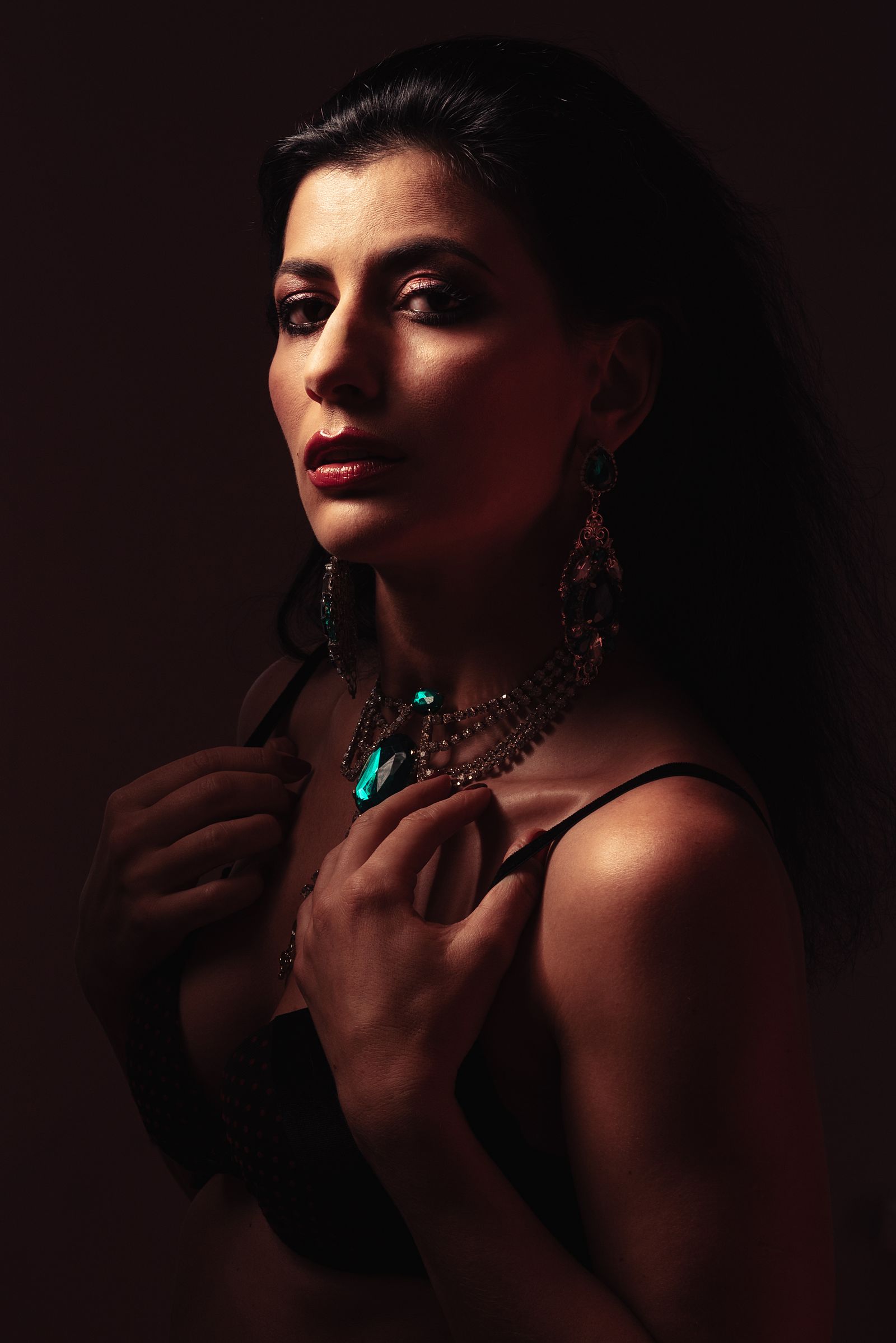
And every morning, just as I was drinking my first coffee looking at the shore, I saw her. The girl from the next balcony. Always at the same time, always in the same pose: pinned to a sun lounger, her laptop resting on her legs, her sunglasses carelessly reflecting the sun. Her hair, a dark brown that shone like honey in the morning light, was always exactly the same unkempt, as if the very idea didn't concern her. She wore linen trousers and shirts that hid the shapes of her body, but the alignment of her silhouette, the way she held herself, exuded a concentrated, almost severe grace. She was whole. Closed. Like an exquisitely beautiful book whose pages were stuck together.
"Myrto," the woman from the shop right below called her, when I got my cheese pie one day. "From Athens, an architect. On her own. She has a dog too, a very nervous one."
And she was right about the dog. Sometimes I'd see him looking with his big, sad eyes from the glass balcony door, a thin grey greyhound that seemed more like a restless ghost than an animal. I never heard him bark. Only lurk.
One Tuesday morning, when the north wind was blowing more strongly and the ropes of the "Ateras" were slapping melancholically against the mast, it happened. Her balcony door opened abruptly and a long, grey shadow shot out like an arrow. The dog, obviously frightened by something inside, threw himself downwards, losing his balance on the steps leading to the piers. I immediately stepped out onto the deck, worried he might fall into the cold water, but he, with a desperate leap, jumped from the pier onto my deck, his long legs slipped and he ended up somewhere among the boat's oars, trembling all over.
"Aris!" Her voice was louder than I expected, full of panic. She appeared on the balcony, without her sunglasses, her eyes wide, full of terror. She saw me immediately. "Sorry! I'm so sorry!"
She hurried towards the pier, dressed in what looked like a nightgown, her feet bare. Without thinking, I bent down and carefully extended my hand towards the frightened dog. "Easy, big guy. Easy. It's okay."
The dog looked at my hand with a mixture of awe and hope. His teeth weren't visible, he was just trembling.
"He doesn't bite, he's never bitten, he's just afraid of everything," Myrto said, reaching the edge of the pier, next to the boat. She came so close I could see the fine stress lines around her eyes, the spot on her neck that had stayed white from the sun. She smelled like soap and something else, like dry corn.
"How will you get him back?" I asked, keeping my cool. "Do you want to..."
Before I finished the sentence, she made the jump. She grabbed onto the pier, her fingers white from the pressure, and with a move that showed unexpected agility, let her body drop onto the deck. The dress rode up a little, revealing a part of her thigh, and I managed with supreme effort to fix my gaze on her eyes.
"Thank you," she murmured, bending down and gently pulling the dog towards her. Aris responded, sliding his head under her arm with a sighing submission. "I told you not to come out, you silly boy," she spoke to him in a low, ashamed tone, letting her forehead rest on his back.
"Is this all yours?" she asked, gesturing towards the "Ateras."
"Yes. For a few weeks. Until... until I find some sense," I said, and as soon as I said it I felt foolish.
She raised her eyes to the boat, with a quick, professional glance that took in everything: the wood that needed a little care, the old sail, the atmosphere of temporary refuge. "It seems... peaceful," she finally said. She was being kind.
"More peaceful than a balcony above a taverna," I said, and she made a sound, something between a laugh and a breath. It was the first time I'd seen her relax, and the difference was like a light turning on inside her.
"I've learned to work with noise," she said. "But Aris hasn't. That's why he panicked, I think. A truck was passing."
We looked around, as if expecting the imaginary truck. Our rhythms had suddenly slowed. The wind blew a light breeze between us.
"Are you a bartender?" she asked, looking at the tattoos on my arm that escaped my shirt sleeve.
"Former," I said. "Now... pleasure craft owner."
"And how's the pleasure going?"
I smiled. "Still looking for the instructions. You? How's architecture from a balcony in Skiathos?"
A shadow passed over her face. "It's going. You cut out the city noise, but sometimes I think I've cut out something else too. Something important." She stopped, as if regretting she'd said so much. "I should go. Thank you again. And sorry for the... invasion."
"No invasion," I said sincerely. "Visits are always welcome. Aris's too."
She looked at me for a moment longer, her eyes scanning my face as if reading a blueprint. Then, she picked up the dog with a strength I didn't expect from her slender frame and carefully passed him back onto the pier. Before climbing the steps, she turned.
"Nikolaos, right?" she asked.
"How did you know?"
She gestured towards the boat with her head. "It has a name. And the buoy has yours."
And with that, without another word, she climbed back up to her balcony, Aris following her with his tail between his legs. But before closing the door, for a second, she stopped and looked towards the boat. I was still there. She probably expected that too. She didn't speak, didn't wave. She just held that gaze for a moment, long, open, before disappearing inside, leaving only the open door to bridge the space between the water and her stone world.
Three days passed. Three days during which the image of the empty door on Myrto’s balcony remained nailed in my mind. I worked harder on the deck wood, scraping the salt wear with a chisel, as if I could erase my own too. On the afternoon of the fourth day, however, something changed. As I was sitting with a coffee, watching people pass on the pier, I saw her coming down the steps. She was wearing white linen trousers and a blue shirt that hung loose from the waist. Aris followed her, his breath regulated to her slow, determined pace.
She stopped in front of the “Atera,” without this time the awkwardness of the first encounter. “Nikola?”
I stood up. “Myrto. Is everything okay?”
“Not exactly,” she said, and a tender line of anguish appeared between her eyebrows. “Do you remember I told you about Aris? About his fear?”
“Yes.”
“His trainer… yes, he has a psychologist, a long history… she suggested careful exposure. Calm steps near the water, maybe a very calm boat ride sometime.” Sometime. The phrase hung in the air. “I know it’s a strange request. But I thought… since you have the boat, and the dinghy…” Her halting words were more eloquent than any complete sentence.
I didn’t think about it for even a second. “Of course. I’m glad you asked me.”
The surprise on her face dissolved into relief. “Really?”
“Really. Boats hate staying still. So do I. When do you want?”
“If it’s not too much trouble… maybe tomorrow afternoon? I don’t know what I should bring…”
“Just Aris. And maybe a bikini, only in case he agrees to get in,” I told her, waiting for the reaction.
Her mouth almost closed, as if she were holding back a smile. “I’ll mention it. And for me?”
“For you, whatever you want,” I said, and I blushed as soon as I realized how ambiguous it sounded.
She understood too. She blushed slightly, but kept her gaze on me. “At five?”
“At five. I’ll take you to a place that’s perfect for beginners. And for beginner dogs.”
*
Koukounaries from the sea was another life. The purple of the sunlight fell sideways on the dense pine-covered treetops that shaded small, golden beaches. I decided not to go with the sailboat. It was too formal. Instead, we untied the small wooden boat, the “Koritsia,” as the previous owner had christened it with enigmatic humor. Aris, to our surprise, came aboard with a gentle, though intensely hesitant, tug on his neck. He sat on the floor, between Myrto’s feet, and closed his eyes, determined to face the dream like a nightmare.
I rowed. My shoulder muscles, more accustomed to raising glasses, complained politely. Myrto had put on sunglasses and was observing the landscape, her fingers unconsciously stroking the dog’s head.
“It’s good here,” I said finally, turning toward a small shallow inlet, almost hidden by a large rock. The sand was golden and smooth, the water truly crystal clear. “Very quiet. And shallow. He can go in up to his knees and not panic.”
We anchored the boat and jumped out. The water was cool. Aris, after Myrto lowered him down with infinite patience, remained standing stiffly on the sand, his long legs sinking a little, his eyes wide with awe.
“Come on, Aris,” Myrto spoke to him in a voice I had never heard from her – warm, encouraging, full of hope. She took a little water in her palm and showed it to him. He lifted his head, sniffed, and then, with the slowness of a gantry crane, put one foot on the cool surface.
I watched him, lying on the sand, propped on my elbow. “Clap for him,” I said quietly. “It encourages him.”
She turned toward me, with an expression that sought confirmation. In the glow of the fallen afternoon, without her fresh urban haircut being perfect, without the laptop as a shield, she looked younger. Vulnerable. A low laugh escaped her lips when Aris finally put his second foot in the water, up to the ankle, and stayed there, gazing at the miracle of it.
“You should see how I’ll have him in a week,” she said, and her voice had a playful note that did something to my chest.
“You’ll have him like concrete and you’ll put bougatsa on him,” I answered.
She laughed openly this time. It was a rich, lively sound that suited the surroundings. “Excuse me, but Aris is a Glyfada dog. He likes clover and feta.”
“Ah, an aristocrat. Now I understand everything.”
We sat on the sand, watching Aris explore the edges of the beach with hesitant curiosity. The conversation flowed easily, without the weight of the first meeting. She told me about the office in Athens, about the endless creative meetings and clients who changed their minds about the color of a frame after months of work.
“You know what’s the worst?” she said, digging a little hole in the sand with her finger. “That I ever loved it. The design, the idea of space, how a building can change your mood. And now I feel like I’ve sold it to a cartload of people who are interested only in cost.”
“The receipt and the bill,” I added. “I know. At the bar, I was something like an unofficial psychologist. I heard about problems with the wife, with the boss, with the body. And then I’d make them a cocktail and a silly joke. Single-use relief. Until I realized that no one asked how I was doing.”
“And how were you doing?”
“Terrible,” I admitted. “I drank from my own reserves. I played the cheerful one, until I stopped feeling anything. So I sold what I had and bought the ‘Atera.’”
“And did you find the instructions?” she asked, and in her gaze there was genuine curiosity, not irony.
“Not yet. But at least now the water I see is real. It isn’t printed on a bottle of vodka.”
She fell silent, thoughtful. Aris returned and lay down beside us, still wet from his feet, his breathing now calm.
“I think the opposite,” she said finally. “I think I’m trying to make my digital water more real. To disconnect it. And I feel so powerless sometimes, Nikola. As if I’ve forgotten how to be… simple.”
Her name came out of my mouth more easily than I expected. “And yet, Myrto, what you’re doing now… sitting on a hidden beach with a frightened dog and a stranger, a former bartender… isn’t that simple?”
She looked at me over her sunglasses. Her eyes, in the soft afternoon light, were the color of honey. “No,” she whispered. “It isn’t simple at all. It’s… strangely complex.”
The sun had begun to descend toward the tops of the pine trees, casting long shadows. Time, which in the harbor raced or stopped abruptly, here seemed to have found a natural, slow rhythm. Like the breeze that blew now, full of scents of pine and salt.
"Should we head back?" I asked, without really wanting to.
"I think Aris has done enough for today," she said, looking at the dog who was now sleeping peacefully. "Me too."
I helped her lift the dog back into the boat. Her hand was cool from the water, her fingers slender and strong when they gripped my arm for support. The contact lasted only a second, but her warmth remained on my skin.
On the return, I rowed more slowly. Myrto had taken off her sunglasses and was watching Skiathos grow before us, the harbor becoming a collection of toys in shades of blue. Our thoughts were visible in the air between us, but neither of us gave them voice. It was a silence filled with the swish of the oars in the water, Aris's faint sigh, and the promise that this trip was only the first page of something we both wanted to read.
The appointment for the next trip had been arranged with messages that seemed innocent, but every word in them trembled. "Aris seems to be looking forward to it," Myrto wrote. "Me too," I replied, and the text just sat there, a confession without a paragraph break.
On Wednesday afternoon, the sky was different. A hazy mist covered the sun, giving the water a silvery, threatening finish. "Is rain coming?" Myrto asked as she jumped into the boat, dressed in a puffy blue sweater and thin trousers.
"Comfortable," I said, although the heaviness in the air reminded me of the first signs of the meltemi wind. "We'll stay close to the shore."
Aris, however, was calmer than the last time. He sniffed the air, his ears perked up, as if he understood the change. We rowed toward the same cove, but by the time we reached Koukounaries, the wind had begun to whistle more loudly between the peaks of the rocks. The water, previously smooth as glass, had now begun to etch small, dark ripples.
"Nikola?" Her voice held a note of concern.
I turned to look at her. Her hair, loosely untied, was being whipped against her face by the wind. "It's fine. There's a small inlet a little further on, sheltered. We'll wait there until it passes."
The inlet was exactly that: a crack in the rock, no more than twenty meters long, with a strip of coarse white sand at its end. The sound of the oars echoed differently inside here, as if we were entering a cave. The sea was almost calm, but high up, on the lips of the rocks, the wind howled.
I dropped the anchor and the silence that followed was deep, melodic, decorated only by the dripping of the oars and our breathing. The closeness of the narrow space made everything seem more intense: her scent of some cedar and orange blossom perfume, the sound of her sweater rubbing against her chest as she lifted Aris.
"Are you cold?" I asked.
"No," she said, but rubbed her hands. "It's the humidity. It's seeped right into the bones."
Without a second thought, I pulled from the bag the thermos of wine I had for such occasions. "For treatment from the inside out," I said, offering it to her.
She took a large gulp and sighed. "That was salvation," she murmured, and a drop of wine remained on her lips. She passed it with the tip of her tongue, a movement so quick and unconscious it made the blood buzz in my ears.
She sat in the bow, hugging her knees. "We were talking about how you were doing. What about me?" she asked suddenly. "Tell me, Nikola. When you look at me from your balcony… what do you see?"
The question was so direct it left me speechless. "I see a woman who is always above it all," I said finally, honestly. "Like a very good photograph. Beautiful, focused, complete. But…"
"But?"
"But sometimes, very late at night, when you think no one is watching, I see you bow your head into your hands. And then the photograph breaks. And I just see a woman. Tired."
Her eyes filled with moisture, but she didn't cry. The drops were just there, temporarily obscuring the color of honey. "It's terribly exhausting," she whispered, "to constantly play the role of the person who has everything under control. At the office, with the family, even with the dog. I'm afraid that if I stop, everything will collapse."
"Maybe it needs a few cracks," I said, moving a little closer. The space between our feet on the narrow deck had shrunk to centimeters. "To let a little light in."
Her gaze flew from my eyes, to my lips, and back. "Are you a crack, Nikola?"
"Perhaps," I said. "Or perhaps just a house next door. Time to stop taking shelter."
Her hand, which was hanging down, was dangling next to mine. When the boat rocked due to a small wave, her side lightly brushed against mine. It was just a touch of fabric, but beneath it, the warmth of her body was an electric discharge. We remained motionless there, the point of contact burning like a small flame.
She didn't pull her hand away. Instead, she slightly stirred her fingers, so that her little finger found mine and touched it, intertwined. It was such a small, such a concentrated courtship that it stuck in my throat.
"Myrto…," I said, and my voice sounded broken from the humidity and the anticipation.
"Don't talk," she whispered. Her eyes said what words would ruin. She lifted her hand slightly and the tips of her fingers touched the back of my hand, following a vein. It was as if she were drawing a line on the most sensitive surface of my being. I raised my hand and turned it, offering my palm. Without hesitation, she threaded her fingers through mine, and the connection was so strong, so natural, like two pieces locking that had been waiting a long time.
The return to the harbor was silent, full of the weight of that simple, catalytic contact. Our fingers had only separated when I needed to grab the ropes, but the sensation of them, woven together of their own volition, remained burned onto my skin. We stood on the pier, Aris stretching his legs beside her, and our farewell look lasted much longer than it should have. She didn't say "thank you." I didn't say "see you." It was clear that something had begun and now lived between us, breathing.
The following days were a strange dance of letters across a screen. In the morning, a message from her: "Aris was staring insistently towards the harbor side. I think he's annoyed you didn't take him for a walk today." I would reply: "He's naughty. He ate all my bread. Should I take him for a remedial session?" The answer would come hours later, as if weighing every word. "He might need it. But I'm afraid I need more exposure than Samos."
At night, when the world of Skiathos faded and the apartment lights looked like constellations on the hill, the messages grew deeper. "What exactly causes the crack, Nikola?" she asked once. "When did you realize everything was a false self?"
I wrote her truths I had shared with no one. About the nights at the bar, when the smiling customers seemed like dolls, and I behind the counter felt more alone than anyone. About the horror of paperwork, the emptiness of success without satisfaction. "I realized when I stopped feeling anything," I wrote to her. "When a spilled coffee or a broken glass provoked neither irritation nor concern. Only a vast, dead calm."
She replied with texts that read like diary excerpts. "Architecture is the art of the void," she sent one night. "You shape the void, the space where others will live. I never thought about who would live inside my void. Until now."
It was Tuesday, about ten days after the walk on the sand, when my phone buzzed almost at midnight. Her voice was low, few words. "I'm sorry to bother you. Aris... is unbearable. He's barking at one spot in the hallway and refuses to move. I think... I think he wants company. Yours."
My body responded before my brain even understood. "I'll be outside in five minutes."
Her apartment was on the first floor of an old neoclassical building, with high ceilings and windows overlooking the harbor. She let me in, dressed in simple black shorts and a t-shirt that showed the shape of her collarbones. The space was impeccable, decorated with minimal furniture and white walls, but full of books and maps. Aris was already sleeping soundly on a blanket, without a trace of anxiety.
"He's a good messenger," I said, not hiding my smile.
"He was my only excuse," she said simply, closing the door quietly. She stood before me, her back leaning against the wood. The space between us was filled with all the innocent questions and the not-so-innocent answers. "I don't know how to do this, Nikola. I'm not... a person of momentary things."
"No one is," I said, looking at her. "Until they are."
She took a breath, as if preparing for a dive. "I don't want any more games. I don't want us to think about what we should say to the dog. I want... to just not think."
I approached. Her scent was different here, in her home. Less salt and sun, more soap and that warm, papery scent of old books. I raised a hand and rested my fingertips on her jawline, just below her cheekbone. Her skin was incredibly warm.
"Then don't think," I whispered.
It was she who closed the final distance. Her lips met mine with an urgency that broke through every restraint. It wasn't sweet or hesitant. It was hungry, direct, the explosion of all the accumulated attraction, curiosity, the loneliness that had found a mirror. Her hands grabbed my face, her fingers plunged into my hair, pulling me closer as if afraid I would retreat.
I answered in the same key. I grabbed her by the waist and pulled her against my body, feeling every curve align perfectly. The taste of her, of coffee and something sweet like apricot, was intoxicating. The kiss changed rhythm, from desperate to deep, excavating, as if we were learning each other's mouth for the first time.
When we parted to breathe, her forehead was resting against mine. Her eyes were closed, her eyelashes casting shadows on her cheeks.
"That," she said, her voice raw with passion, "was not a crack."
"No," I agreed, moving my lips to her neck, to the wise curve leading to her shoulder. "That was the tunnel. And the light is still very far away."
So very far away, and so utterly irrelevant now.
I asked her if she wanted to see where I really lived.
The answer was another kiss, deeper and with more familiarity, as if we had already crossed some invisible boundary. The next week, our moments were stolen. Afternoons on her balcony with a glass of wine, dawns on the deck of the *Ateras* with coffee, her body covered only by my coat. Aris had become completely accustomed, lying at our feet like a warm, breathing blanket. We spoke little, touched a lot. It was a love without a name, which had the luxury of existing only in the now.
I knew time was running. My harbor permit was expiring and the northerly wind had calmed enough for me to head north. On the last afternoon, as I was securing the sails, I saw her standing on her balcony, watching me. Her gaze wasn't sad. It was focused, determined.
"Come," she said, when I went up for the last trip of Samos. "Let's go for a ride. All of us."
"Tonight?"
"Tonight," she confirmed. "Before dawn. Take us for an excursion. Wherever you want."
I didn't even think about it. The *Ateras* was ready. We secured Samos with a safety harness on the deck, on a bed of blankets. Myrto boarded with a backpack, from which the neck of a wine bottle protruded. She was wearing a dress that all landlubbers think is suitable for sailing – thin, white, playing with the breeze of undressing. One look and I knew she wore nothing underneath.
We started the small engine and slipped away from the harbor lights. Aris, surprisingly, was already sleeping soundly, relieved from the intense sensations of previous outings. Myrto sat next to me at the helm, her free hand resting on my thigh. Skirting the southwestern coast, the island's lights became sporadic dots and then nothing. The only sounds were the hum of the engine, the splash of water against our sides, and the dog's quiet breathing.
"There," she said suddenly, pointing to a black silhouette of a headland cutting the starry sky. "There's a small cove. I never charted it, but I remember it from old drawings."
I obeyed her. I steered the boat into a narrow entrance, where the water became like glass. The rocks formed a protective circle. We dropped anchor in less than five meters of depth. I stopped the engine.
The silence that followed was stunning. An absolute, serene quiet, broken only by the gentle wash of waves on the sand. The sky was a tapestry of diamonds, so brilliant they reflected in the black water.
"My God," Myrto whispered, lifting her gaze.
I shifted slightly, leaning against the helm. "Far enough from the tunnel?"
She turned to me. In the half-light, her features appeared soft, her eyes two even darker pools. "I think we found the light," she said.
It was she who made the first move. Her white dress fell to the deck like a ghost abandoning its body. The starlight painted the rich curves of her silhouette, her bare shoulders, the shadow between her breasts. I watched her, absorbed, forgetting to breathe.
"I don't want to leave it there, Nikola," she said, her voice steady, without a note of regret. "I want to live it all. To the last drop."
I took her by the hand and helped her down from the helm. On the deck, we spread the blankets next to the motionless Samos. There was no hurry anymore, only a vast, boundless curiosity. My hands explored every inch of her, from the curve of her back to the inner side of her thighs. Her own fingers opened the buttons of my shirt, tearing it open with a tenderness that felt like urgency.
"You are so beautiful," I murmured, kissing her stomach, feeling her muscle tighten beneath my lips.
"You are so real," she replied, pulling me onto her.
Our union was like our entry into the harbor. Smooth, deep, a perfect fit. A sighing "yes" escaped her mouth, and I heard it get lost in the stars. We moved with a slow, wondrous rhythm, each other's body being both sanctuary and adventure at once. It wasn't only physical. It was the complete surrender of every barrier that had kept us apart, at the café, on the balconies, in the polite distance.
In the midst of passion, suddenly, we laughed. A sweet, wind-tossed laugh, when Aris, still asleep, reacted to some dream of his with a muffled yelp. Myrto hid her face in my neck, her laughter seismic against my own chest.
"Don't stop," she murmured, gently biting my broad shoulder.
I didn't stop. The intensity crested in a wave that swept us off our feet, together, a musical alarm so strong that for a moment I thought it would throw us from the boat. We held each other tightly, fingers interlaced, our breaths a single trembling rhythm.
When the silence returned, it was full of the pulse of our blood. We lay back to back, watching the galaxy swirl above us. Between us, Aris sighed deeply in his sleep.
"I won't tell you to stay," Myrto said after a while, her hand stroking my chest.
"And I won't tell you to come," I replied, kissing her hair.
"Was that all of it?"
"It was more than I ever expected to have," I said, and I meant it.
The first rosy color of dawn painted the clouds in the east. We rose with stiff limbs, salty from the seawater and from each other. We took Samos and went down to the cabin. In the narrow bed, our bodies found a way to fit together again.
When I woke with the sunlight streaming through the curved glass, she was nestled in my embrace, her head on my chest. Aris watches calmly from the floor. He knew, as I knew, that the journey would continue, but this harbor, this night, would remain an untouched memory. A brief, intense story that closed a chapter. Nothing more, nothing less. Exactly what we needed.
Did you like it?
Be the first to rate